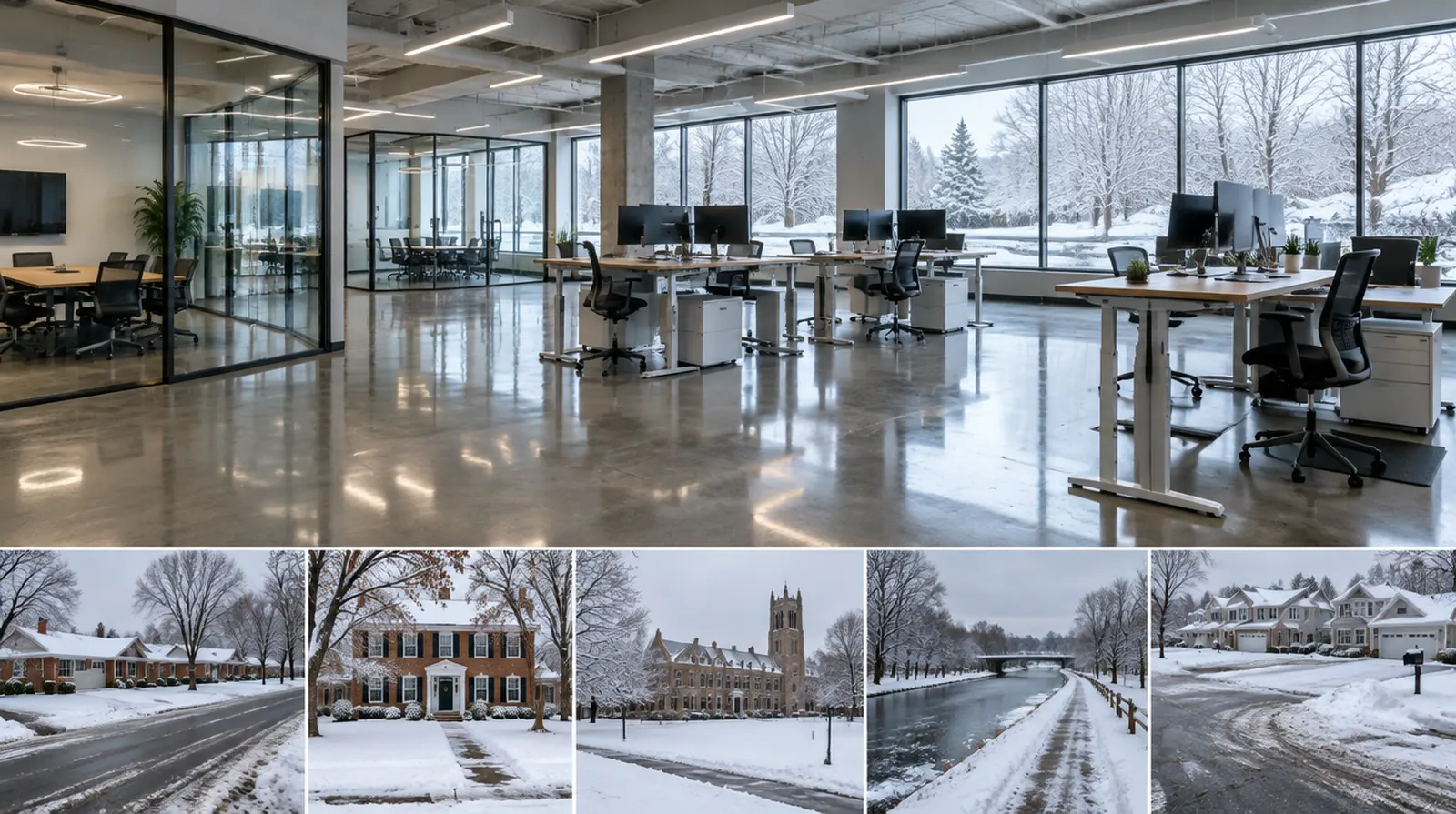
What polishing actually does
Polishing is a mechanical process, not a coating. We grind the slab with progressively finer diamond tooling, starting with coarse metal-bond segments that flatten and open the surface and finishing with fine resin pads that bring up the shine. Along the way we apply a chemical densifier that soaks into the concrete and reacts to harden it. The finished floor is the concrete itself, refined until it reflects light. A final guard or sealer adds stain resistance.
Levels of shine and exposure
You get two main choices: how much aggregate shows and how glossy the surface is.
- Cream finish: very little grinding, so the smooth top paste stays and almost no stone shows.
- Salt and pepper: a light grind that reveals fine sand and small specks of aggregate.
- Exposed aggregate: a deeper grind that shows larger stones for a terrazzo-like look.
Gloss ranges from a soft satin to a mirror-like shine. We can show you samples and photos so you can compare.
Where it fits
Polished concrete is a great fit for offices, retail stores, restaurants, gyms, showrooms, lobbies and warehouses. In homes, it suits modern builds, basements and slab-on-grade additions where the owner wants an industrial or minimalist look. It handles heavy foot traffic and rolling loads well and stays bright without waxing or stripping.
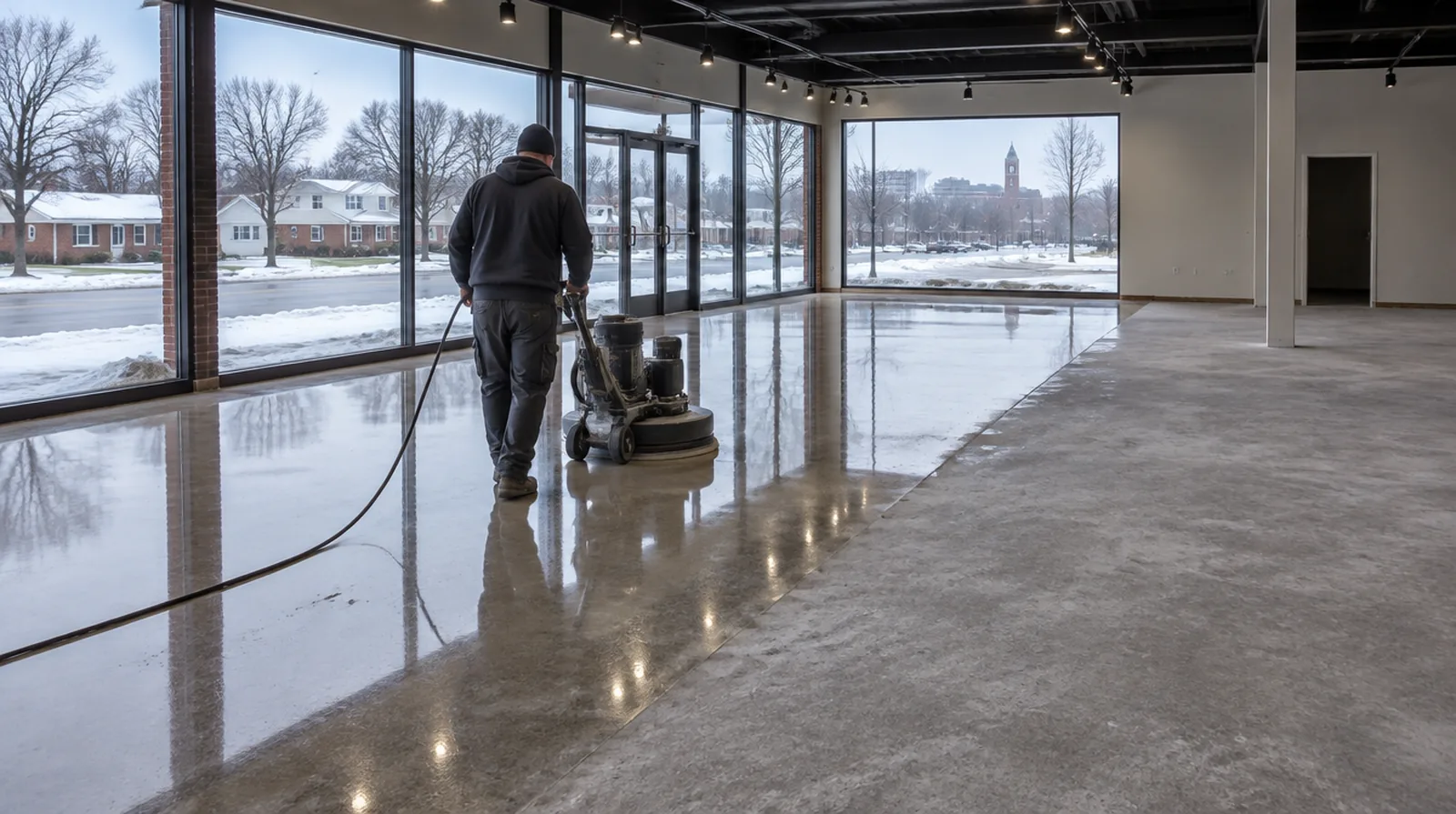
What we look for first
Not every slab polishes evenly. Patches, old adhesives, sealers, cracks and past repairs all show through. We inspect the slab, test hardness and do a small test area when needed. Mastic from old tile or carpet glue must be removed. Cracks can be filled with a color-matched filler, though they will remain visible as part of the floor's character. We explain all of this so you know what the finished floor will look like.
Dye and design options
Concrete dyes add color during the polishing process. Popular choices include warm browns, charcoal, soft grays and subtle blues. We can cut bands, borders and logos into the surface, which works well for retail and corporate spaces. Dyes penetrate the concrete rather than sitting on top, so they wear with the floor instead of peeling.
Winter considerations
Polished floors near doors face salt and slush every winter. Chloride residue can dull the surface over time if left to sit. A good entry mat system, regular cleaning with a neutral cleaner and an occasional burnish keep the shine. We can also apply a stronger guard at entrances. For areas where salt sits for long periods, such as vestibules with heavy traffic, we sometimes recommend a coated system instead.
Maintenance
Daily or weekly dust-mopping removes grit, which is the biggest cause of wear. Wet-clean with a pH-neutral concrete cleaner. Every year or two, depending on traffic, a high-speed burnish restores gloss. There is no stripping, waxing or recoating schedule like with vinyl tile, which is why many businesses find polished concrete costs less to own over time.
Timeline and disruption
Polishing takes longer than coating because of the many grinding passes. A small office may take two or three days. Larger spaces take longer, and we can phase the work around your schedule. The process is mostly dry with HEPA dust collection, and there are no strong odors. Floors can usually be used right after we finish.
Polished floor or coating?
Polishing is ideal when you want a natural, durable, low-maintenance floor and the slab is in reasonable shape. If the concrete is badly damaged, heavily patched or exposed to harsh chemicals, a commercial coating may be the better choice. We will give you an honest recommendation at the visit. For homes that want a decorative look, a metallic floor is another option.
New construction tip
If you are building or adding on, tell your concrete contractor early that the slab will be polished. A hard-troweled, well-cured slab with careful placement of joints polishes far better than a rough one, and it can save grinding steps later.
to plan a polished floor.
Call (716) 296-6345 for a free estimate.