What a winter does to bare concrete
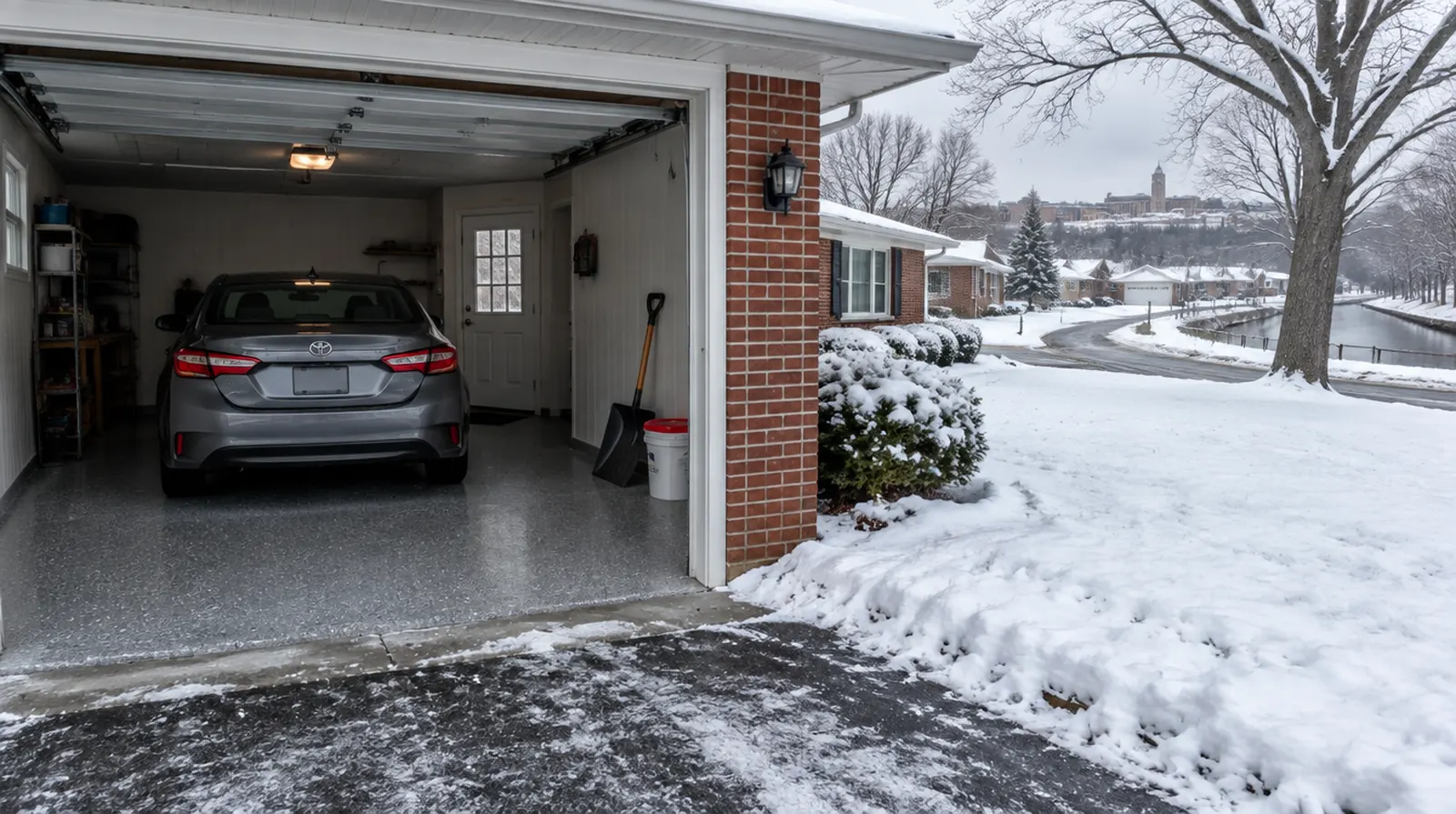
Picture a typical January week. The car comes home caked with a gray crust of brine and slush. It melts off onto the floor and pools in the low spots. Overnight, the garage drops toward freezing, and some of that salty water works its way into the top of the slab. Over a few seasons, the surface begins to pop and flake, especially where the tires sit and right inside the door. Add oil drips, spilled washer fluid and the sand that rides in on boots, and a bare floor ends up stained, dusty and rough. A coating seals the surface so that water and salt stay on top where you can push them out.
Grinding, not etching
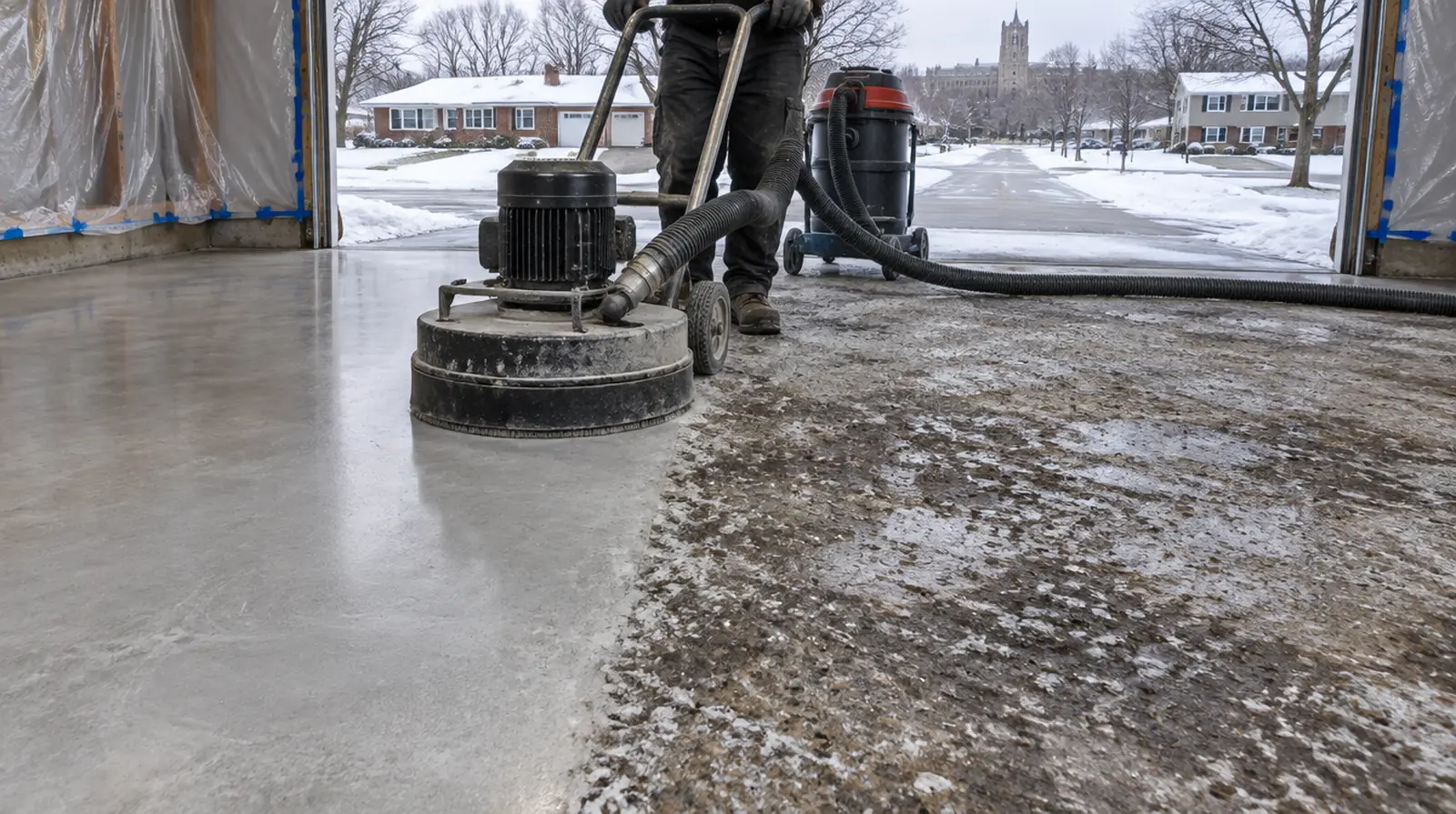
Acid etching is cheap and fast, but it leaves an uneven surface and a residue that can keep a coating from bonding. We grind every garage with diamond tooling instead. Grinding removes the weak top layer, old sealers and any paint, and leaves a consistent texture the primer can grab. Our grinders run into HEPA vacuums, so dust stays contained, and we tape off walls and doorways before we start.
Fixing salt damage
Grinding usually reveals more scaling than you could see before. We fill pitted areas with a resin mortar and level them so they do not telegraph through the finish. Cracks get cut open and filled, using a flexible material on cracks that still move with the seasons. The front edge of the slab, where the door seal sits and plows sometimes push ice, is often broken, and we rebuild it so the coating ends in a sharp, sealed line. We also treat deep oil stains so they do not lift the coating from below.
Layer by layer
- Primer: a low-viscosity epoxy that soaks into the ground concrete. If our meter shows high moisture, we use a moisture-mitigating primer.
- Body coat: a pigmented, high-build epoxy that adds thickness and sets the color.
- Broadcast: vinyl flake to refusal for a textured floor, a partial broadcast or none for solid color.
- Clear topcoat: a polyaspartic or urethane top that resists salt, chemicals, UV and hot tires.
Thickness matters. A thin, one-coat product wears through at the tire paths in a winter or two. A full system is several times thicker and far tougher.
Snowblowers, trucks and hot tires
Many garages here hold a snowblower with steel skid shoes, a heavy SUV or pickup and sometimes a trailer or boat. Skid shoes scratch, heavy vehicles flex the floor and warm tires coming off a highway can soften weak coatings. We pick topcoats rated for abrasion and hot-tire resistance and recommend a rubber mat where the snowblower parks. That small step keeps the finish looking good much longer.
Safety and traction
A wet, glossy floor can be slick, and in a snowy climate that matters. Full flake broadcasts add natural texture, and we can mix an aluminum oxide grit into the topcoat for extra grip. We usually add a bit more texture in the first few feet inside the door, where slush hits the floor first. You choose the balance between smooth and grippy, and we show you samples at the visit.
Schedule and cure time
Most two-car garages take one to two days. Foot traffic is fine within hours to a day, and vehicles can return after one to three days depending on temperature and the topcoat. In cold months we run heaters and use faster-curing products. If you need the garage back by a certain date, tell us and we will plan around it.
What it costs and why
Price depends on square footage, how much repair the slab needs, moisture conditions and the system you choose. A newer slab with light wear costs less than an older floor with heavy scaling. Your written estimate lists each step so you can compare it against other quotes line by line. Ask about flake options or fast-cure topcoats when we visit.
to coat your garage floor.
Call (716) 296-6345 for a free estimate.