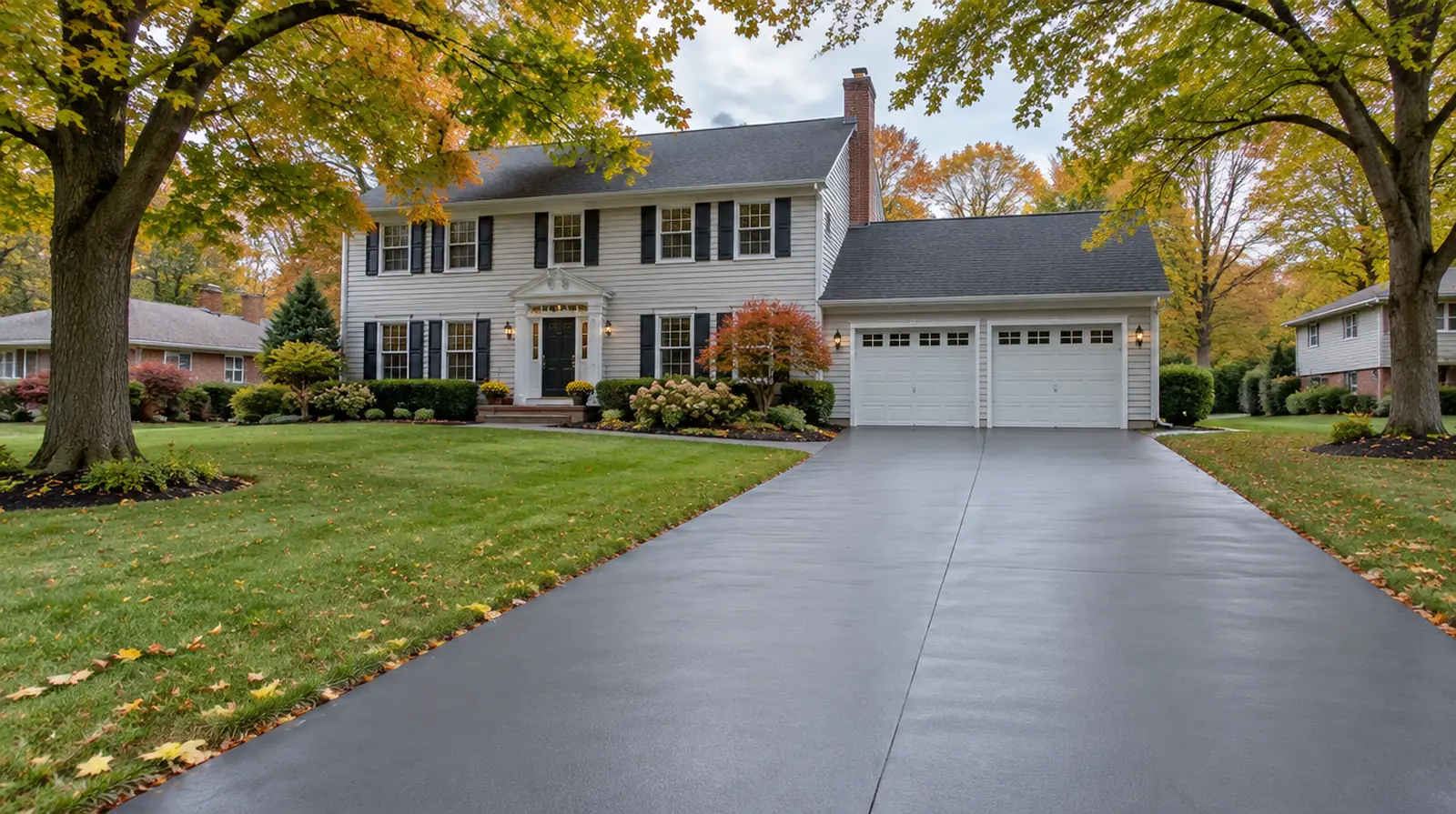
What winter does to driveways
A concrete driveway in our area goes through dozens of freeze-thaw cycles each winter. Snowmelt soaks in, freezes, expands and thaws again. Rock salt and brine from the street speed up the damage. Plows and shovels scrape the surface. Over time, the top layer begins to scale, small pits appear and cracks widen. Oil drips from cars add dark stains. A cleaned, repaired and sealed driveway resists all of that much better than bare, neglected concrete.
Our driveway service
- Inspection: we look at cracks, scaling, staining, drainage and any previous sealers.
- Deep cleaning: hot-water pressure washing removes dirt, salt residue, mildew and loose material.
- Stain treatment: degreasers and poultices pull out oil, rust and tire marks.
- Repairs: cracks are filled and minor scaling is patched or resurfaced.
- Sealing: a breathable penetrating sealer or decorative coating is applied in even coats.
Sealers for our weather
For most driveways, we recommend a silane or siloxane penetrating sealer. It soaks into the concrete, repels water and salt and does not leave a film that can peel or get slippery. It also lets moisture escape from below, which is important in a freeze-thaw climate. For homeowners who want more color or a wet look, we can use an acrylic sealer, though it needs more frequent maintenance.
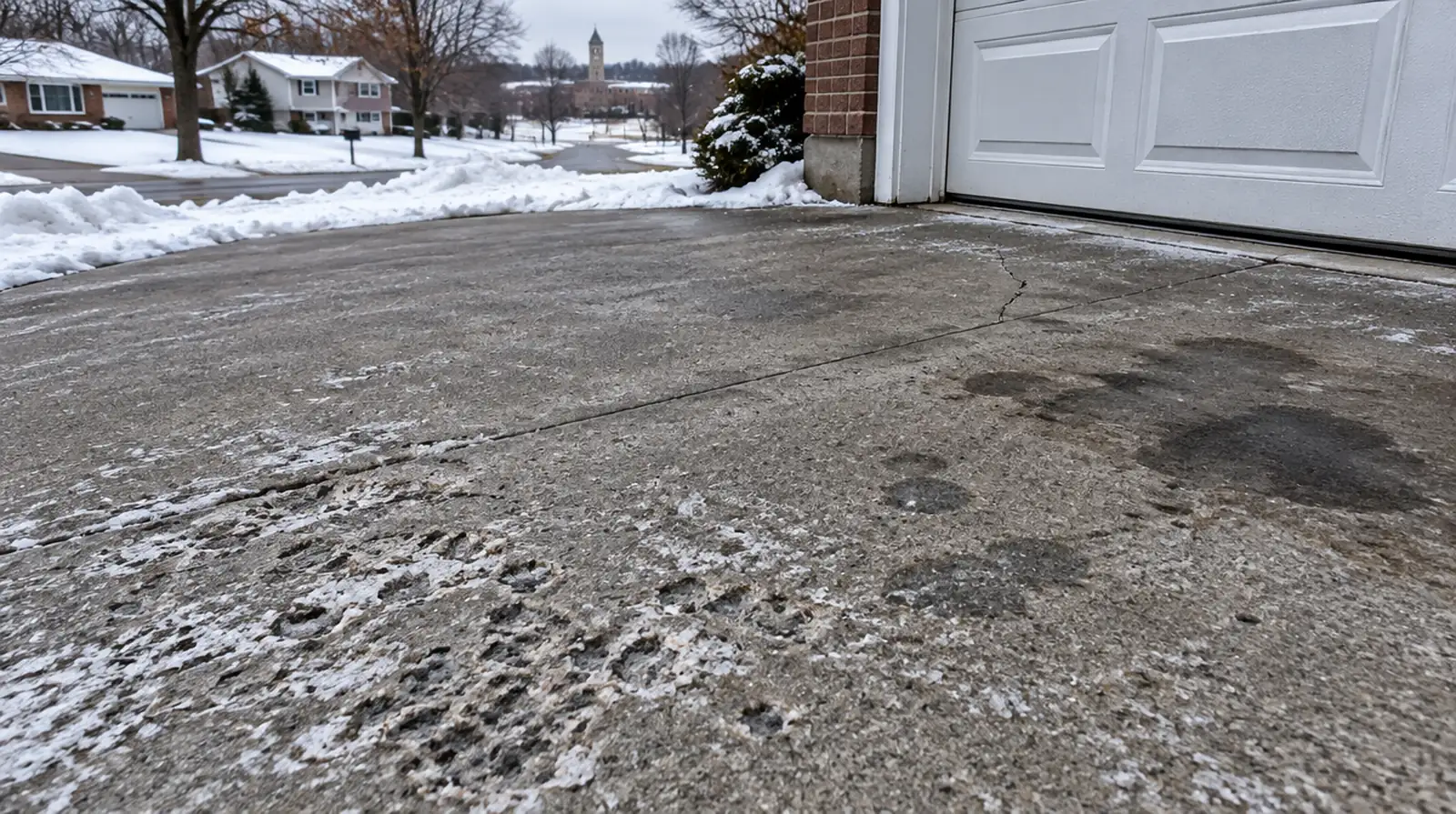
Cracks and scaling
Small cracks let water reach the base under the slab, where freezing can heave and widen them. We clean and fill cracks with flexible sealants that move with the concrete through the seasons. Light surface scaling can be patched or covered with a thin resurfacer. Deep, widespread damage may need replacement, and we will tell you honestly if sealing is not worth it.
Oil and rust stains
Older cars, lawn equipment and fertilizer can leave oil and rust marks on driveways. We use targeted cleaners and poultices to lift as much as possible before sealing. Some deep or old stains will lighten but not disappear completely. Sealing afterward makes future spills easier to clean.
Decorative coatings
For homeowners who want a new look, we can apply decorative overlays and coatings, including tinted sealers and textured finishes. These need a sound base and careful prep, and they require periodic maintenance in our climate. We will walk you through the pros and cons so you can decide.
When to schedule
Late spring through early fall is the best time for driveway work. Sealing in late summer or early autumn gives the product time to cure before plows and salt arrive. The surface needs a dry forecast for at least a day. Most driveways are finished in a single day, and you can drive on it after the sealer cures, usually within 24 hours.
Protecting your investment
Use calcium magnesium acetate or sand instead of rock salt where possible, shovel early so snow does not pack into ice and reseal every few years. A sealed driveway pairs well with a coated garage floor and sealed walks and steps.
Drainage matters
Water that sits on a driveway causes more damage than water that runs off. We look at how your driveway sheds water, whether downspouts empty onto it and whether low spots hold puddles that freeze. Simple fixes like redirecting a downspout or sealing the joint along the garage apron can prevent water from collecting under the slab. Where settling has created a dip, we may suggest a slab lifting contractor before sealing. Fixing drainage first means the sealer can do its job and the concrete is less likely to heave or crack during a hard winter. We include any drainage observations in your written estimate so you can plan ahead.
Shared and long driveways
Some homes in town share a drive with a neighbor or have a long run back to a detached garage. We can coordinate with both households, split the estimate and schedule the work so nobody is blocked in for long. For long drives, we work in sections so one lane stays open while the other cures.
to refresh your driveway.
Call (716) 296-6345 for a free estimate.