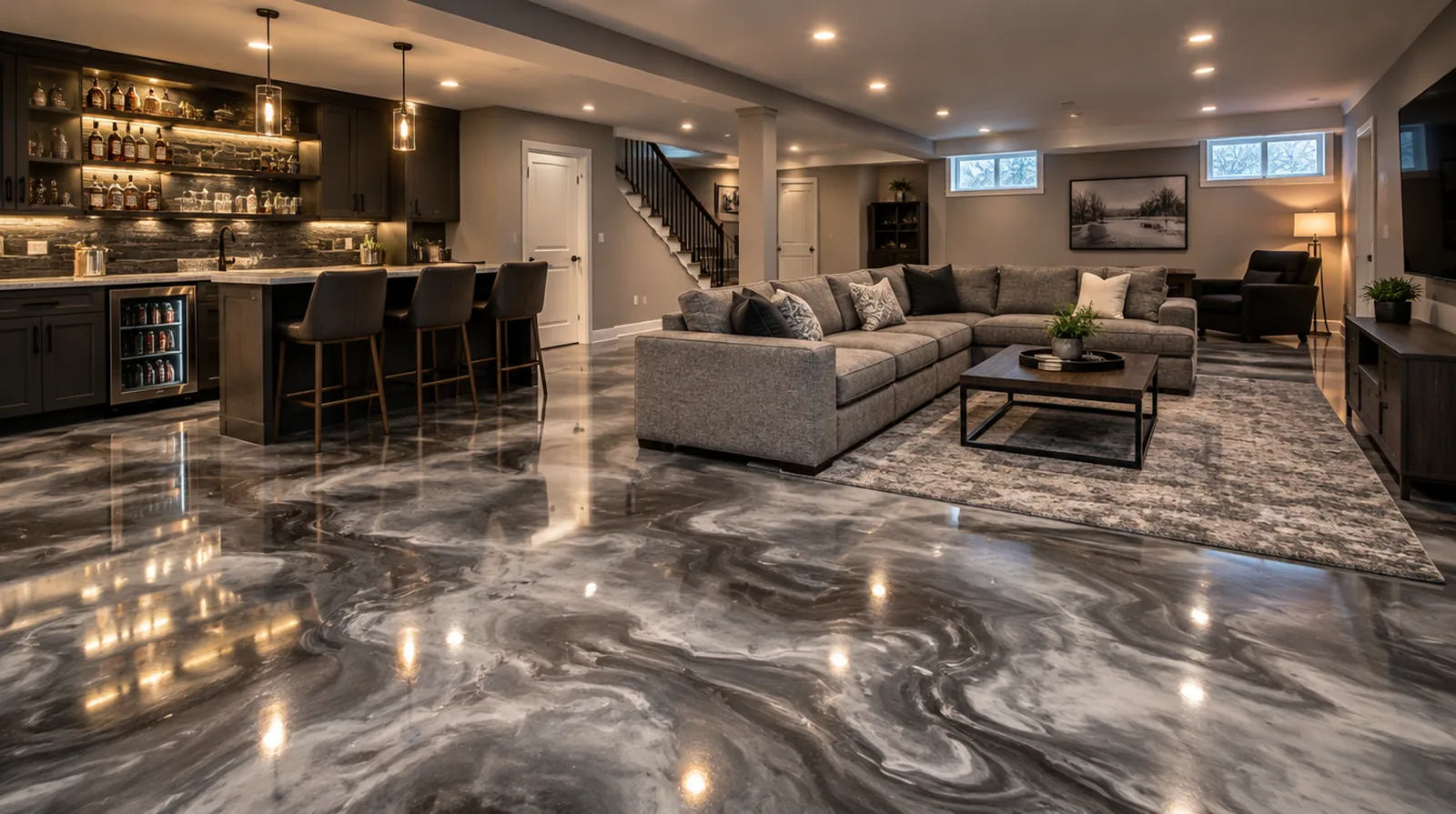
How metallic floors are made
A metallic floor uses a clear epoxy loaded with fine mica and metallic pigments. While the resin is wet, the installer works it with rollers, trowels, brushes, solvent sprays and sometimes a leaf blower. The pigments drift, settle and catch light, creating veins, clouds and ripples. Because the movement depends on the installer's hand and the way the resin flows, no two floors are ever the same. Once the effect is set, the floor gets a clear protective topcoat.
Where it works best
Metallic floors belong in rooms where people spend time and notice the floor. In homes, that usually means finished basements, home theaters, bars, game rooms and showpiece garages. In businesses, they show up in salons, boutiques, dental and medical offices, car showrooms, breweries and restaurants. They look less at home in a working garage that sees heavy salt every day, because the smooth gloss shows scratches and slush trails more than a flake finish does.
Basements here
Lots of homes in town have basements, and many sit on slabs that are fifty or more years old. Some show white mineral deposits, old paint or a line where water once stood. Before we pour anything decorative, we test moisture carefully. If the slab is pushing up vapor, we install a moisture-mitigating primer first. Skipping that test is the main reason basement coatings bubble or peel, and we never skip it.
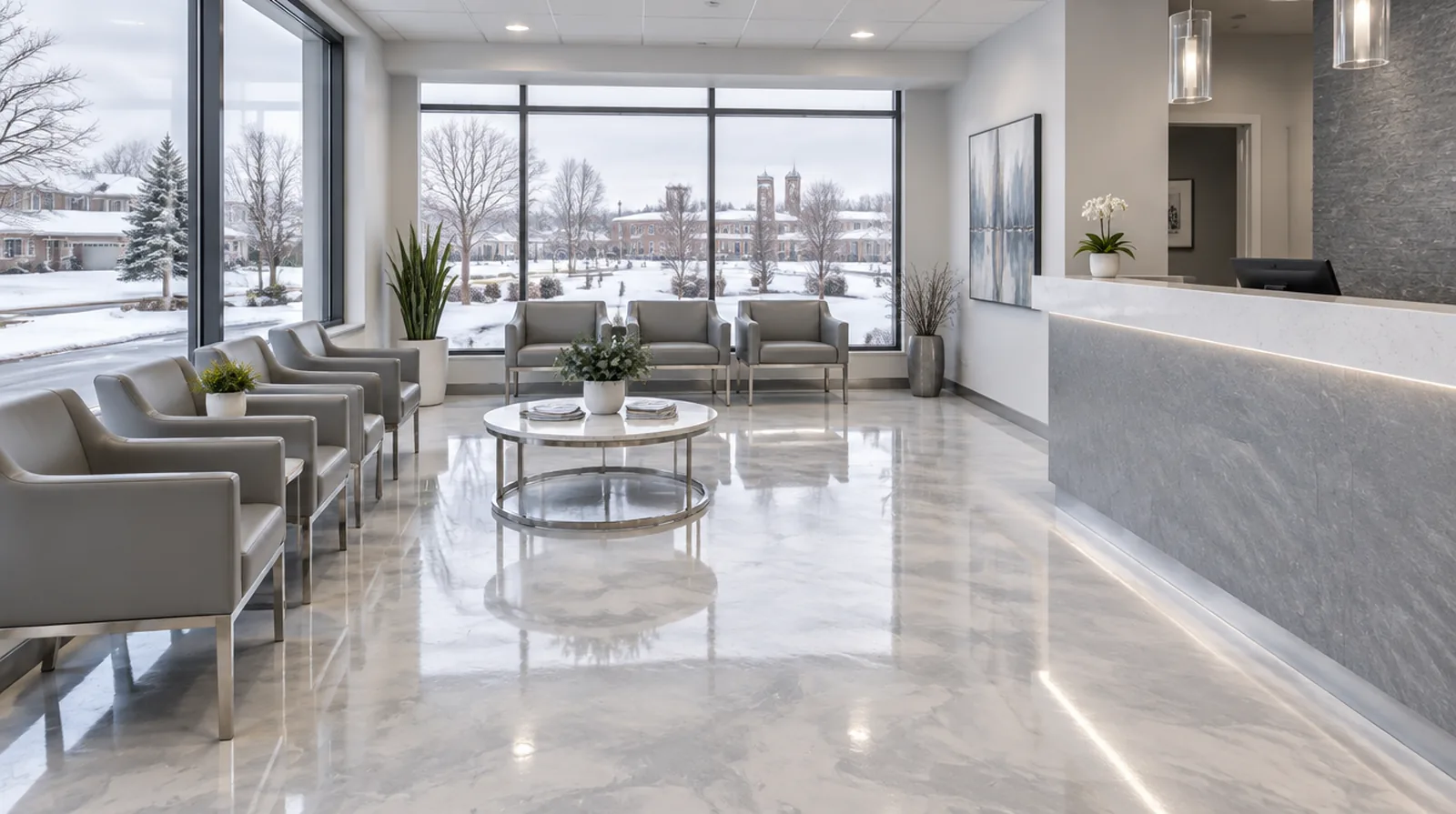
Designing the look
We start with a conversation about color and mood. Some people want a calm pearl or silver that brightens a lower level. Others want a bold black and gold or a deep copper that makes a bar feel upscale. We can create:
- Marble: soft veins that resemble polished stone.
- Lava or cell: organic cells and craters with high contrast.
- Ocean: layered blues and whites that look like moving water.
- Subtle pearl: a quiet sheen for offices and living spaces.
We show photos of past work and small samples so you can picture the result.
Prep still matters most
A metallic floor is thin and glossy, so it reveals every flaw underneath. We grind the slab, fill cracks, patch holes and level low spots before any color goes down. A smooth, flat surface lets the pigments flow evenly and keeps defects from showing through. That prep takes time, but it is what separates a showroom finish from an uneven one.
Protecting the finish
The final coat is a clear urethane or polyaspartic that resists scratches and UV. You can choose high gloss for maximum depth or satin to soften reflections and hide wear. In entryways or areas with grit, we may add a fine anti-slip additive. Furniture pads, entry mats and regular dust-mopping keep the shine for years.
Timeline
Most metallic floors take two to three days, including prep, primer, the decorative pour and topcoat. Larger or multi-color designs may take longer. The room should stay closed while the resin cures, and we let you know exactly when you can walk on it and move furniture back.
Care
Dust-mop often, clean spills quickly and wash with a mild, non-acidic cleaner. Avoid dragging heavy furniture. If the floor ever dulls in a high-traffic spot, we can lightly abrade and recoat the topcoat without touching the design. Want something lower maintenance? Ask about polished concrete or a flake floor.
Lighting changes everything
Metallic pigments respond strongly to light. Warm recessed cans bring out gold and copper tones, while cool LED strips push a floor toward silver and blue. Daylight from a walkout basement door shows the most depth of all. Before we pour, we ask what fixtures the room has or will have, and we test small panels under similar light. It sounds like a minor detail, but it is the difference between a floor that looks exactly like the photo you loved and one that reads a shade off. If you plan to change fixtures during a remodel, it is worth deciding on them first. We are happy to meet your electrician or designer on site so the floor and lighting plan come together at the same time.
to design a metallic floor.
Call (716) 296-6345 for a free estimate.