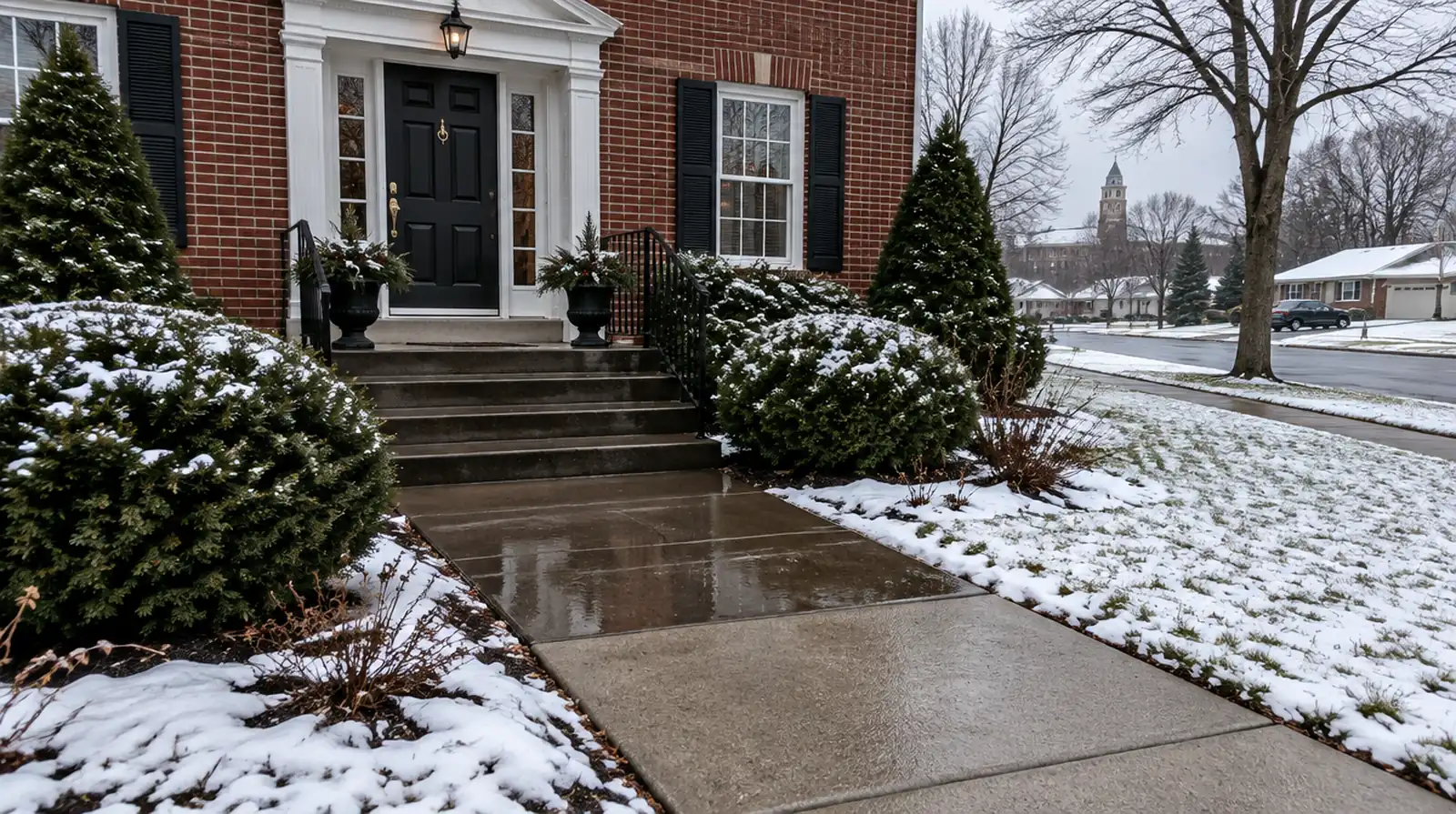
The problem with unsealed concrete
Concrete is porous. Rain and snowmelt soak into the surface, and when temperatures swing around freezing, that water expands and contracts inside the pores. Add rock salt from shoveling and the brine carried up from the road, and the top layer begins to scale, pop and crumble. Steps, walkways and garage aprons often show damage first because they get the most salt and the most foot traffic. A penetrating sealer slows that process by keeping water and chloride out.
Sealer types
- Silane and siloxane penetrating sealers: soak in, leave no film and keep water out while letting vapor escape. Our usual choice for outdoor concrete here.
- Acrylic sealers: leave a thin film with a wet look or satin sheen. Best for decorative and stamped concrete, but need resealing more often.
- Urethane and epoxy coatings: thicker films for interior floors and covered areas, not usually recommended on exposed outdoor concrete in our climate.
We pick a product based on the surface, its exposure and how you want it to look.
Cleaning first
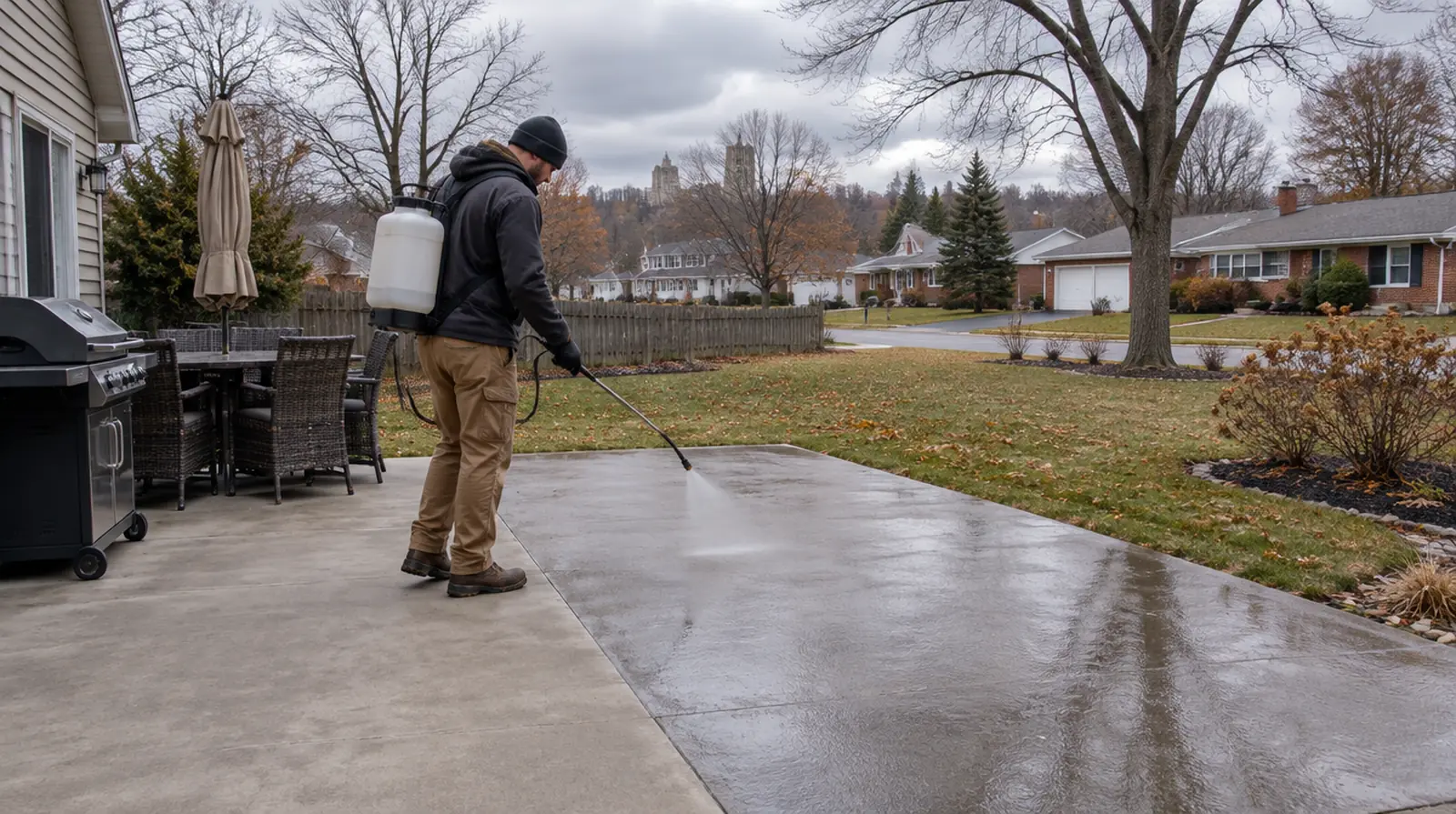
Sealing dirty concrete locks the dirt in. We pressure wash with hot water when needed, treat oil stains, remove rust and organic growth and let the surface dry. If there is old sealer that is flaking or peeling, we remove it before applying a new product. A clean, dry, open surface is what lets the sealer penetrate properly.
Repairs before sealing
Sealing will not fix existing damage. Cracks should be filled, scaled areas can be resurfaced or patched and broken step edges can be rebuilt. We assess the concrete and let you know what repairs make sense. Sometimes a section is too far gone and needs replacement by a concrete contractor, and we will tell you if that is the case.
Timing
Penetrating sealers work best on dry concrete in mild weather, typically late spring through early fall. Sealing in late summer or early autumn is ideal because it gives the sealer time to cure before the first salt goes down. New concrete usually needs about a month to cure before sealing. We watch the forecast and schedule around rain.
Patios and pool decks
Backyard patios and pool decks deal with sun, rain, leaves, grills and sunscreen. A penetrating sealer keeps water out and makes cleanup easier. For stamped or colored concrete, an acrylic sealer can bring back color and add a sheen. We can also add a fine grit to film sealers to keep them from becoming slippery.
Garage aprons and entries
The strip of concrete just outside the garage door takes a beating from salt dripping off cars. Sealing the apron, along with the driveway, slows scaling and reduces the grit tracked inside. If you have a coated garage floor, sealing the apron protects the transition and helps both surfaces last.
How often to reseal
Penetrating sealers typically last three to seven years depending on the product, traffic and exposure. Acrylics may need attention every two to three years. A simple water test tells you when it is time: if water darkens the concrete quickly instead of beading, it is time to reseal. For full driveway care, see our driveway coating service. For indoor slabs, see garage floor epoxy.
Choosing the right ice melt
Even a sealed surface lasts longer when the ice melt is gentle. Rock salt, sodium chloride, is the harshest on concrete and plants. Calcium magnesium acetate and calcium chloride are kinder options, used sparingly. Sand adds traction without chemicals. Shoveling soon after snowfall keeps snow from packing into ice, so you need less melt in the first place. For new concrete, avoid deicers entirely during its first winter if you can. These habits, combined with a fresh sealer every few years, make a real difference in how long steps and walks stay smooth and safe.
We also seal stoops, landings and walkway pavers at rental properties, where a little prevention saves landlords from replacing crumbling steps a few years down the road.
to seal your concrete.
Call (716) 296-6345 for a free estimate.